

How to assess design novelty in Vietnam
By LE Hoai Duong, B.Sc., LL.B, MIP 15 January 2026
This article examines in detail the relatively ambiguous legal provisions governing the assessment of design novelty, partly in light of IP Vietnam’s recent acceptance of our arguments in Design Applications Nos. 3-2021-00358 (Design ’358) and 3-2021-00359 (Design ’359), filed by our firm in the name of Apple Inc.
The provisions on “novelty” and related matters applicable to Designs ’359 and ’358 were substantively the same as those under current Vietnamese law and its implementing regulations. Accordingly, before delving into these two specific cases, it is worth first noting and clarifying these provisions.
Under Article 65.1 of Law on Intellectual Property, an industrial design is deemed novel if it “differs significantly from industrial designs that have been publicly disclosed” prior to the filing date (or the priority date, as applicable).
Under Rule 23.5 (dd) of Circular No. 23/2023/TT-BKHCN (Circular No. 23), two industrial designs are deemed to be significantly different from each other when the two designs “have at least one different essential design feature.” This test for design novelty follows the same principle as the novelty test applied to inventions under Rule 16.5(e)(ii) of Circular No. 23.
Two matters need to be clarified here: (i) the meaning of the phrase “having at least one different essential feature”; and (ii) the definition of an essential design feature.
Although not specified in the regulations, IP Vietnam’s practice over the years suggests that two designs “having at least one different essential feature” generally fall into one of the following two situations: (i) the later-filed design has at least one additional essential feature that differs from the cited earlier-filed design; or (ii) although the later-filed design has the same number of essential features, at least one essential feature differs noticeably and significantly from the corresponding essential feature of the cited design.
Regarding the definition of an essential design feature, Rule 21.4(b) of Circular No. 23 reads:
An essential design feature is easily recognizable/memorable design feature, necessary and sufficient to determine the nature of an industrial design and distinguish the industrial design from other industrial designs used for products of the same type.
(Emphasis added)
There are neither regulations nor case law explaining the phrase “necessary and sufficient” in this provision.
It is likely that, in following the principle for assessing invention novelty under Rule 16.5(e)(ii) of Circular No. 23, the design drafting team also borrowed the phrase “necessary and sufficient” from Rule 16.5(d)(i) of the same Circular, which applies to inventions. However, the logical concept of “necessary and sufficient” in Rule 16.5(d)(i) appears to have been misunderstood and incorrectly transposed into Rule 21.4(b). Assuming I am correct (and I welcome challenges to my analysis), Rule 21.4(b) is logically flawed and makes nonsense, because a single essential design feature may be a necessary—but not sufficient—condition for determining the overall visual impression (nature) of an industrial design and for distinguishing it from other industrial designs. Accordingly, the wording of this Rule would have been different.
In IP Vietnam’s practice for many years, this logically flawed definition has been, and continues to be, interpreted in a practical and straightforward manner as follows: an essential design feature is an easily recognizable/memorable feature that contributes to the overall impression of an industrial design and helps distinguish it from other industrial designs.
We now return to the two design cases—Design ’358 and Design ’359—filed in the name of Apple Inc.
In Notifications Nos. 8592/SHTT-KDCN and 8593/SHTT-KDCN, dated February 12, 2025, IP Vietnam stated that Design ’359 and Design ’358 were “not significantly different” from the industrial design disclosed in U.S. Design Patent No. D882,563 (Design ’563) and therefore lacked novelty.
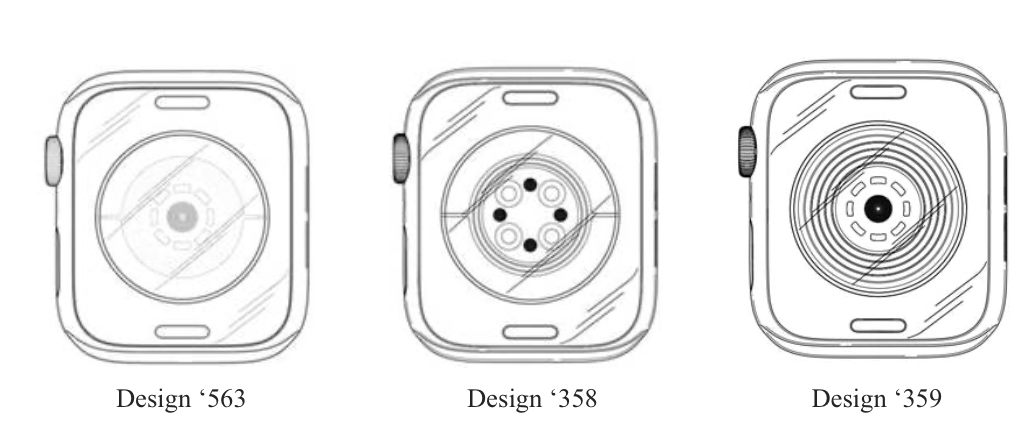
In our responses to IP Vietnam’s refusals, we first addressed our views on the two above-mentioned matters: (i) the meaning of the phrase “having at least one different essential feature”; and (ii) the definition of an essential design feature.
We then argued that the design features on the backs of Designs ’358 and ’359 should be considered essential because each (i) is easily recognizable and memorable, and (ii) contributes to the overall impression of the industrial design and helps distinguish it from other industrial designs.
We further argued that, when comparing Design ’358 with Design ’563, and Design ’359 with Design ’563, the essential back features in each pair are noticeably and significantly different—particularly given that, in practice, where a later-filed design is close to the prior art, even small differences between the later-filed design and the cited design may be an important factor enabling consumers to distinguish between the two designs when purchasing or using the product.
IP Vietnam accepted all of our arguments and agreed to grant patents for Designs ’358 and ’359 in Notifications Nos. 155567/SHTT-KDCN and 155568/SHTT-KDCN, dated October 6, 2025.
In conclusion, unlike the U.S. ordinary observer test for design novelty—which requires consideration of the design as a whole—IP Vietnam applies a more feature-by-feature approach to design novelty. Consistent with the principle used to assess invention novelty, this assessment involves a meticulous analysis in which the examiner focuses on identifying and isolating the novel features of the design as compared with the prior art. In the case of Design ’358 with the novel essential back feature, the examiner evaluates how this feature draws the viewer’s attention and contributes to the overall aesthetic appeal of the design—in other words, whether it helps set Design ’358 apart from all others in the prior art.